
A tested chicken and black bean taco recipe, plus the build formula that makes any taco balanced without making it boring.
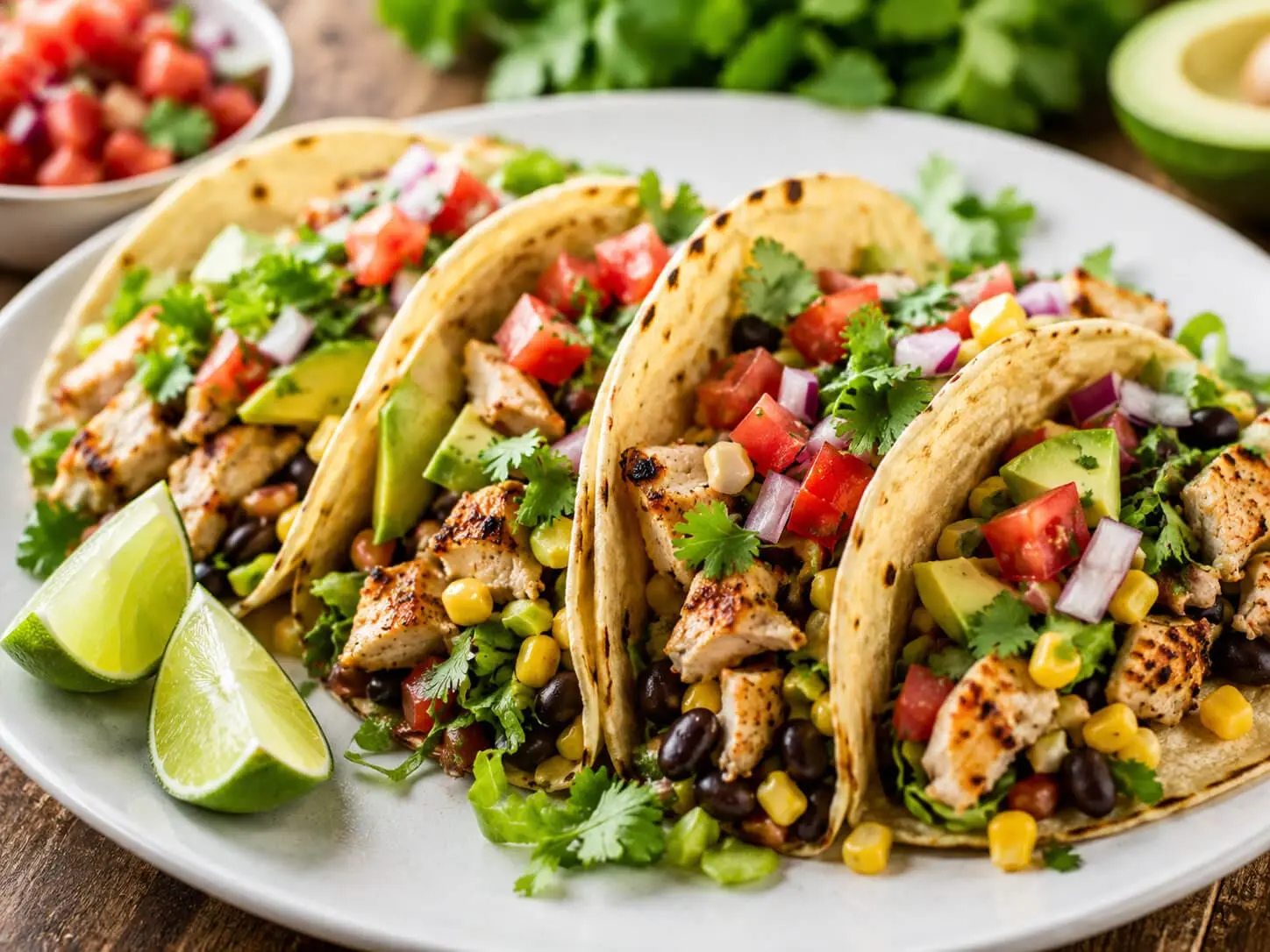
A taco is as healthy as the four things you put in it. Start with a lean protein, add a fiber source (beans, cabbage, or both), keep the shell small and unfried, and get your creaminess from avocado or plain Greek yogurt rather than a sauce base. Do that and a two-taco plate lands around 450–550 calories with 30g or more of protein — enough to actually keep you full, which is the part most “light” taco recipes get wrong.
Below is the recipe we cook most often in this kitchen, the numbers behind it, and the swaps that change those numbers meaningfully rather than cosmetically. If you already know the recipe you want, the recipe collection further down splits our tacos by protein and by goal.
The Healthy Taco Formula
Most taco recipes fail one of two ways. They cut so much that you eat four tacos and are hungry an hour later, or they call themselves healthy while sitting on a fried shell under a quarter cup of cheese. The fix is structural: fill five roles, and let each one do a job.
| Role | What it does | Good picks | Rough cost per taco |
|---|---|---|---|
| Lean protein | Drives fullness; the single biggest factor in whether you stop at two | Chicken breast, 93% lean ground turkey, white fish, shrimp, lentils, tofu | 90–140 cal, 12–18g protein |
| Fiber base | Adds bulk and slows digestion without adding much fat | Black beans, pinto beans, lentils, shredded cabbage | 50–80 cal, 4–6g fiber |
| Shell | Sets the calorie floor before anything goes in it | 6-inch corn tortilla, small whole wheat tortilla, lettuce cup | 2–95 cal (see the table) |
| Crunch and acid | Where flavor comes from when you are not leaning on fat | Cabbage slaw, pickled onion, salsa, pico, lime | 5–20 cal |
| Creamy element | Makes it taste finished instead of like diet food | Avocado, plain Greek yogurt, thinned yogurt crema | 25–60 cal |
Figures are approximate and calculated from USDA FoodData Central entries for common forms of each ingredient; brands vary, especially tortillas and salsa. Use them to compare options, not as label values.
Once the five roles are covered, the specific recipe matters less than people think. The one below is our default because it is the fastest to get on the table, but the same structure holds for baked fish tacos or a taco bowl.
Recipe: Chicken and Black Bean Tacos
Diced chicken breast seasoned with a homemade spice blend, finished in the pan with black beans, corn, and salsa. One skillet, about 30 minutes, and the filling reheats well enough to build lunches from.
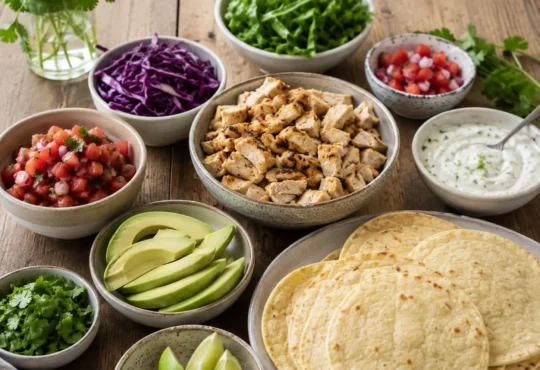
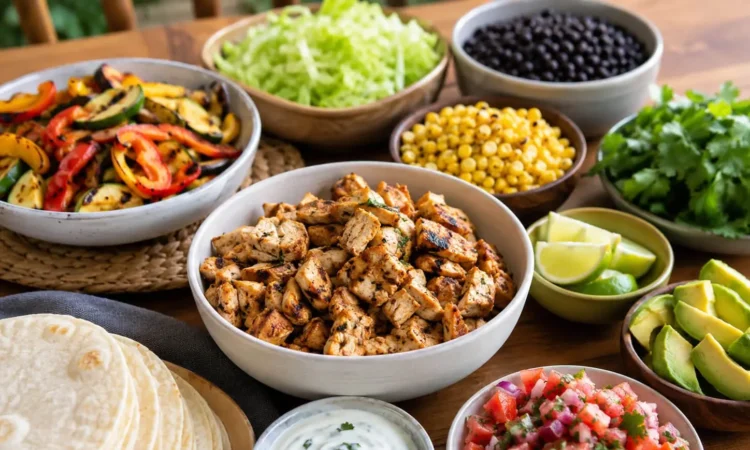
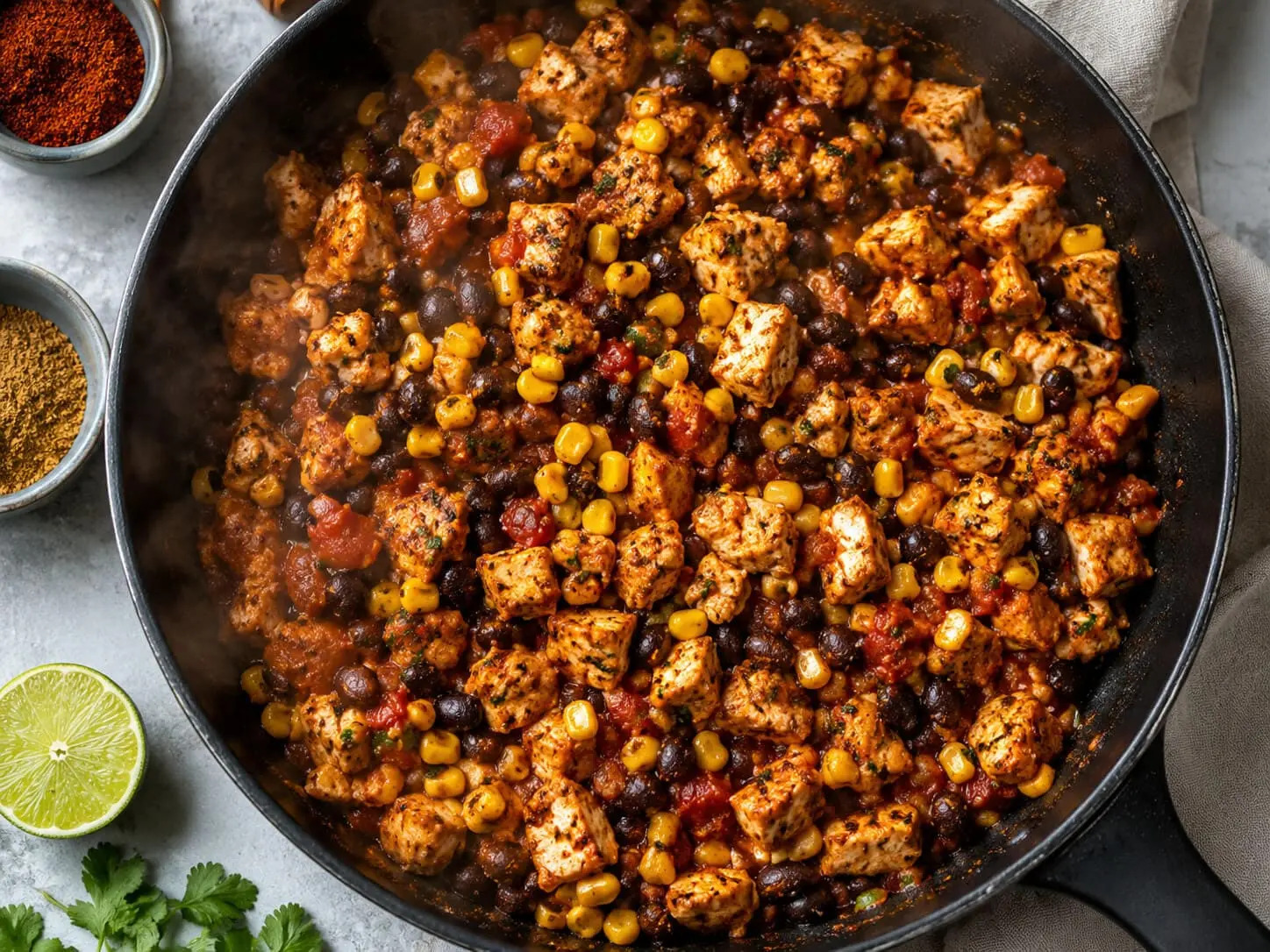
Every photograph on this page is of this recipe, cooked in our own kitchen and shot as it came off the stove — no stock images, no substitutions between the pan and the plate. The recipe has been through one revision since it was first published here: the filling quantities went up. The original amounts photographed well and ate like almost nothing, which is a trap this style of recipe falls into constantly.
Ingredients
For the filling
- 1 lb boneless skinless chicken breast, cut into 1/2-inch dice
- 1 tablespoon olive oil
- 1 teaspoon chili powder
- 1 teaspoon ground cumin
- 1/2 teaspoon smoked paprika
- 1/2 teaspoon garlic powder
- 1/2 teaspoon onion powder
- 1/2 teaspoon salt
- 1/4 teaspoon black pepper
- 1 tablespoon fresh lime juice
- 1 can (15 oz) black beans, drained and rinsed — no-salt-added if you can find it
- 1 cup corn kernels, fresh or frozen
- 3/4 cup salsa
For serving
- 8 corn tortillas (6-inch)
- 2 cups shredded romaine or green cabbage
- 1 cup diced tomatoes
- 1 avocado, sliced
- 1/2 cup thinly sliced red onion
- 1/4 cup chopped cilantro
- 1/2 cup plain nonfat Greek yogurt
- 2 limes, cut into wedges
Two ingredient notes that matter. Rinsing canned beans washes off a meaningful share of their packing sodium, so do not skip it. And salsa is where the sodium in this recipe actually lives — jarred salsas commonly run 200–250mg per two tablespoons, which is why the salt in the spice mix is kept low. Check your jar and adjust.
Step-by-Step Instructions
Season the chicken and let it sit
Toss the diced chicken with all the spices, the salt, the pepper, and the lime juice until every piece is coated. Ten minutes on the counter while you chop toppings is enough — the lime is there for flavor, not to tenderize, and much longer than 30 minutes will start to turn the surface of the meat chalky.
What you should see: the spices should cling as a paste, not slide off. If the mix looks dry, another squeeze of lime fixes it.
Sear the chicken
Heat the oil in a large skillet over medium-high until it shimmers, then add the chicken in a single layer and leave it alone for two minutes before stirring. Crowding the pan is the difference between browned chicken and grey steamed chicken — if your skillet is smaller than 12 inches, cook it in two batches.
Doneness check: chicken is done at an internal temperature of 165°F, measured in the thickest piece with a thermometer. Colour is not a reliable indicator. Total time is usually 6–8 minutes for 1/2-inch dice, but the thermometer decides, not the clock.
Add the beans, corn, and salsa
Stir in the drained beans, corn, and salsa and cook 3–4 minutes, until the liquid from the salsa has reduced and coats everything instead of pooling. A wet filling soaks through a corn tortilla in under a minute, so let it tighten up before you assemble.
Warm the tortillas properly
Dry skillet over medium heat, 20–30 seconds a side, until the tortilla puffs slightly and smells toasted. This step is not optional with corn tortillas — a cold corn tortilla cracks down the middle the moment you fold it. If you are doing all eight, stack them in a clean towel as they come off the heat so they steam and stay pliable.
Build in order
Cabbage or lettuce first, then the hot filling, then tomato, onion, avocado, cilantro, and a spoonful of yogurt. Greens underneath act as a barrier between the filling and the tortilla, which buys you a few extra minutes before the shell goes soft. Finish with lime and eat immediately.
Nutrition Estimate and How We Calculated It
Per serving of two tacos, built exactly as written above:
| Calories | ~490 |
|---|---|
| Protein | ~37g |
| Carbohydrates | ~50g |
| Fat | ~13g |
| Fiber | ~12g |
| Sodium | ~540mg |
These are calculated estimates, not laboratory values. They come from summing USDA FoodData Central figures for each ingredient as listed and dividing by four servings. Two things move them the most: your salsa’s sodium, and your tortillas — the eight corn tortillas alone account for roughly 440 of the total calories and a quarter of the fiber.
For context, 12g of fiber per serving is close to half the 28g daily value used on U.S. Nutrition Facts labels, which is unusual for a 30-minute weeknight dinner and is entirely down to the beans and the corn tortillas.
If you are tracking closely, calculate from your own labels rather than borrowing these figures. Canned beans, jarred salsa, and packaged tortillas vary enough between brands that a per-serving estimate built on one set of products can be 50–100 calories off for someone using another.
Which Tortilla to Use
The shell is the one decision that changes the plate before you have added a single ingredient. Approximate values for one 6-inch tortilla:
| Shell | Calories | Fiber | Sodium | Best for |
|---|---|---|---|---|
| Corn | ~50–60 | ~1.5g | Very low | The default here; naturally portion-sized and gluten-free |
| Flour | ~90–95 | ~1g | Often 200mg+ | Folding without cracking; the sodium gap with corn is large |
| Whole wheat | ~90–120 | 2–5g | Varies widely | Fiber, but only if the label confirms it — brands differ enormously |
| Lettuce or cabbage cup | ~2–5 | Negligible | None | Cutting carbs; expect to eat it with a fork |
Corn wins on sodium and portion size, loses on structural integrity. If yours crack no matter what, you are almost certainly under-heating them rather than buying the wrong brand. Whole wheat tortillas are the category where the label matters most: some carry genuine fiber, others are white flour with caramel colour and a health claim on the front.
Swaps That Actually Change the Numbers
Not every substitution is worth making. These are the ones with a real effect, roughly, per serving:
| Instead of | Use | What changes |
|---|---|---|
| 2 tbsp sour cream | 2 tbsp plain nonfat Greek yogurt | Roughly 40 fewer calories and about 3g more protein, with a tang that suits lime better anyway |
| A seasoning packet | The spice mix above | Packets are a common hidden sodium source; mixing your own puts the salt under your control |
| 1/4 cup shredded cheese | 1 tbsp crumbled cotija or feta | Roughly 80 fewer calories, and salty crumbles read as more cheese than mild shreds do |
| A fried shell | A toasted corn tortilla | Removes the frying oil entirely while keeping the toasted flavour people actually want from a hard shell |
| Extra tortillas | Extra cabbage and beans | Volume and fiber without a second shell’s calories — the most effective change on this list |
Swaps that are mostly cosmetic: switching from olive oil to a spray (you lose a little fat and some browning), and skipping the avocado. Avocado carries fat, but it is also doing the work that makes the taco satisfying. Cutting it usually means eating a third taco.
Mistakes We Made First
Under-filling in the name of health
The first version of this recipe used half a cup of beans across eight tacos. The tacos looked right in a photo and ate like nothing. Filling volume is not where you economise — the shell and the sauce are.
Assembling before the filling reduced
Salsa releases a lot of liquid. Skip the reduction step and the bottom tortilla is soaked before the plate reaches the table.
Stacking salt from three directions
Salted spice mix, jarred salsa, and unrinsed canned beans each bring sodium, and together they overshoot badly — the filling tastes fine hot and aggressively salty once it cools for lunch the next day. Rinse the beans, check the salsa label, and season the chicken lightly on the assumption that the other two are doing more than you think.
Crowding the pan to save a batch
A pound of diced chicken in a 10-inch skillet sits in its own released moisture and steams. You get pale, slightly rubbery pieces and a watery filling that then has to be cooked down, which overcooks the chicken further. Two batches take four extra minutes and are the difference between browned edges and grey.
Prepping avocado with everything else
Cut avocado browns within an hour or two even under lime. If you are prepping toppings ahead — for a taco bar or for the week — every other component can be done in advance except this one. Slice it as people sit down.
Meal Prep and Storage
Store the cooled filling in an airtight container and use it within 3 to 4 days, which is the USDA’s window for cooked leftovers held at 40°F or below. Refrigerate within two hours of cooking. When you reheat, bring it to 165°F — in a skillet that is roughly 3–4 minutes over medium heat, or in the microwave in 30-second bursts with a stir between each.
What holds and what does not, over four days of lunches:
- Filling: holds well, arguably better on day two
- Cabbage: holds; romaine wilts by day three
- Tomatoes and onion: prep them, store them dry and separate
- Avocado: cut it the day you eat it, no exceptions
- Tortillas: never pre-assemble — warm them at the point of eating
The filling also transfers directly into a taco bowl over rice, quinoa, or greens, which is the version that survives a commute better than tacos do.
More Healthy Taco Recipes
The same formula, different proteins and different goals:
By protein
- Healthy chicken tacos — grilled and shredded versions
- Ground turkey tacos — the leanest weeknight swap for beef
- Healthy beef tacos — how to keep lean ground beef from going dry
- Fish tacos — baked rather than battered
By goal
- Low calorie tacos — where the calories actually are
- High protein tacos — 40g+ per serving
- Taco bowls — the meal-prep format
FAQs
Are tacos actually healthy?
The format is fine; the fillings decide. A taco built on lean protein, beans, vegetables, and a small unfried shell is a well-balanced plate. The same shell holding fried meat, cheese, and a sour cream base is a different meal. Nothing about a taco is inherently heavy — restaurant portions and fried shells are what people are usually reacting to.
How many tacos is a normal serving?
Two of the tacos above, at roughly 490 calories and 37g of protein, is a full dinner for most adults. If two is not holding you, add cabbage and beans to each one before adding a third shell.
Why do my corn tortillas keep cracking?
Almost always insufficient heat. They need direct contact with a dry pan until they puff slightly, and they need to be kept covered afterwards so trapped steam keeps them flexible. A microwave with a damp towel works but gives you a softer, less toasted result.
Can I make the filling ahead for the week?
Yes — that is the main reason we cook it in one skillet. Make it up to three days ahead, keep toppings separate, and warm to 165°F before assembling.
Where to Start
If you are making tacos tonight, cook the recipe above as written and change nothing — it is the version we have settled on. If you are trying to make taco night lighter as a habit, change the shell and the sauce first, and leave the filling alone. That single decision does more than any other swap on this page.
Made it? Tell us what you changed in the comments — the substitutions readers report are what shape the next revision of this recipe.